The New York Section (New Jersey) of the Society for Applied Spectroscopy (SAS) is the first and oldest spectroscopy networking organization in the United States. We were formed during World War II, before the parent organization of SAS. Our first Gold Medal Award symposium was awarded to Dr. William F. Meggers in 1952. The local section provides a forum for practicing spectroscopists to interact, lead, and share insights that can benefit their respective organizations. Monthly meetings feature research presentations from academia, government, and industry, and provide members with opportunities to expand their knowledge and application of vibration, electronic, and atomic spectroscopy. For more information, click on the "About NYSAS" page.
NY/NJ Monthly Meetings are FREE Zoom Meetings open to all International SAS Members and interested Scientists
Invited Seminar – Thursday, October 15, 2026
12:00 – 1:00 PM EDT
Optimization of a Universal NIR Quantitative Moisture Method for Lyophilized Pharmaceutical Products
Speaker: Deborah Peru │ DP Spectroscopy and Training, LLC
Join Zoom Meeting (See Meeting Details Below)
https://us02web.zoom.us/j/87319425378?pwd=B4f6see8ORev1uctfGyOnjNXsqNOju.1
ABSTRACT
Moisture determination in lyophilized pharmaceutical products is a key quality parameter because moisture directly influences product stability and performance. Karl Fischer (KF) titration is the compendial method for moisture analysis and provides total moisture content in the sample, including both bound and free water. It is a destructive technique that requires a chemical titrant and is often prone to sample-handling errors and possible interferences.
Many industries, including pharmaceuticals, are developing optical methods such as Near-Infrared analysis for indirect moisture determination of samples in sealed containers. As a secondary moisture determination method, NIR measures moisture via spectral absorption in the “cake” portion of the product and correlates it to KF values, the reference method. The key advantages of NIR include its nondestructive sampling, making the sample viable for further testing, elimination of titrants, and improved efficiency in obtaining results (2-3 minutes versus 1-2 hours).
While a universal NIR model for moisture determination would enhance the value proposition of purchasing NIR equipment for quality testing, optical differences among product chemistries, density, particle size, and vial wall thickness are among the leading performance challenges in using a Universal model.
The presentation discusses the development of a universal PLS quantitative moisture model using combined datasets from multiple pharmaceutical laboratories. The author discusses optimizing preprocessing techniques and using scores and loadings to guide PLS model development that minimizes the contributions of excipients and actives while enhancing the contributions of the free- and bound-moisture bands, providing excellent model performance.
BIOGRAPHY
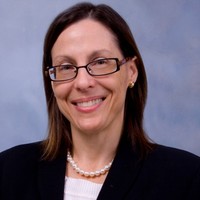
Deborah Peru is the Owner and President of DP Spectroscopy & Training LLC. She has over 40 years of experience in industrial R&D and process analytical technology (PAT) in the petrochemical, specialty chemical, consumer products, and pharmaceutical industries. Her experience is focused on developing near-infrared, mid-infrared, Raman, and SERS methods for laboratory and real-time measurements. Her PAT experience includes using laboratory reactors and in situ particle-size analyzers to optimize products & processes for improved yield, stability, and performance. Ms. Peru is serving as the Secretary for both the Coblentz Society and is the Treasurer of the New York/New Jersey Regional Section of the Society for Applied Spectroscopy (SAS) and is the recipient of the 2019 SAS Distinguished Service Award.
Zoom Meeting Details
Topic: Deborah Peru - Optimization of a Universal NIR Quantitative Moisture Method for Lyophilized Pharmaceutical Products
Time: Oct 15, 2026 11:45 AM Eastern Time (US and Canada)
Join Zoom Meeting:
https://us02web.zoom.us/j/87319425378?pwd=B4f6see8ORev1uctfGyOnjNXsqNOju.1
Meeting chat link
https://us02web.zoom.us/launch/jc/87319425378
Meeting ID: 873 1942 5378
Passcode: 963406
One tap mobile:
+16469313860,,87319425378#,,,,*963406# US
+19292056099,,87319425378#,,,,*963406# US (New York)
Join by SIP
• 87319425378@zoomcrc.com
Join Instructions:
https://us02web.zoom.us/meetings/87319425378/invitations?signature=gBxVmhyHZFuLyv7HTYfWsAFXoS6qdReS6jrfMrZCOus
SAS Virtual Webinar
SAS Virtual Seminar – Thursday, September 17, 2026, 12:00 – 1:00 PM EDT
Advances in Photothermal Mid-infrared Spectroscopic Imaging for Biomedical Diagnostics and Translational Applications
Speaker: Professor Rohith Reddy│ University of Houston
Register Now (log-in required)
Members: Free | Non-Members: $20
The registration page is:
https://sas.memberclicks.net/2026septemberdistinguishedspectroscopistlecture?servId=20214#
Zoom information will be sent to you immediately after you register.
ABSTRACT
Advances in vibrational spectroscopy enable molecularly specific analysis of biological tissues without exogenous labels, creating new opportunities for objective disease detection and grading. Mid-infrared spectroscopic imaging (MIRSI) is particularly powerful because it combines the chemical specificity of infrared absorption with spatially resolved microscopy. When integrated with machine learning, MIRSI can provide quantitative tissue classification and reveal biochemical and structural changes that may be difficult to recognize with conventional histopathology alone.
This lecture will highlight our recent advances in photothermal MIRSI, which offer improved spatial resolution, sensitivity, and experimental flexibility. We demonstrate the utility of these approaches in several challenging biomedical applications. In lupus nephritis, spectroscopic imaging reveals subtle molecular alterations associated with early-stage renal involvement. In ovarian cancer, high-resolution photothermal MIRSI enables tissue segmentation and discrimination of malignant regions, with potential relevance to tumor-margin assessment. In bone marrow disease, spectroscopic signatures serve as markers of osteosclerotic changes, while polarization-sensitive photothermal MIRSI maps collagen organization and fiber orientation, providing complementary structural information for assessing and grading fibrosis.
A major challenge in translating spectroscopic imaging to the clinic is achieving sufficiently high acquisition speed without sacrificing chemical information. To address this limitation, we are developing high-speed mid-infrared frequency-comb approaches, including photothermal dual-comb microscopy, that increase spectral throughput by more than an order of magnitude. We are also pursuing miniaturized photothermal MIRSI platforms to improve portability and facilitate translation beyond specialized laboratory environments.
Together, these developments demonstrate how advances in spectroscopy, microscopy, polarization-resolved measurements, frequency-comb technology, and machine learning can converge to enable rapid, label-free, and chemically specific tissue characterization. Such integrated approaches could advance early disease detection, quantitative pathology, and more precise assessment of disease progression.
BRIEF BIOGRAPHY

Dr. Rohith Reddy is an Associate Professor at the University of Houston, where he leads the Medical Imaging with Lasers Laboratory. His research integrates advanced optical instrumentation, vibrational spectroscopy, biomedical imaging, and artificial intelligence to develop quantitative technologies that advance understanding and diagnosis of human disease.
Dr. Reddy is widely recognized for pioneering advances in mid-infrared spectroscopic imaging (MIRSI) and optical coherence tomography (OCT) for biomedical and clinical applications. His laboratory develops label-free approaches that extract biochemical, structural, and morphological information from cells and tissues without exogenous contrast agents. These technologies have been applied to bone marrow disorders, Alzheimer’s disease, autoimmune kidney disease, and several cancers, including prostate, breast, and gynecologic malignancies. Dr. Reddy received his B.Tech. from IIT Madras, his Ph.D. from the University of Illinois Urbana-Champaign, and completed postdoctoral training at Harvard University. His multidisciplinary research program has resulted in eight patents, with innovations adopted by scientific instrumentation companies such as Thermo Fisher Scientific and Bruker.
His contributions have been recognized with 14 international scientific awards, including the Tomas Hirschfeld Award (2012), William F. Meggers Award (2014), FACSS Innovation Awards (2012 and 2016), multiple Best Paper awards, and the Clara Craver Award (2026) for significant contributions to vibrational spectroscopy. Dr. Reddy is a Fellow of the Society for Applied Spectroscopy (SAS) and serves as President of the Coblentz Society. His service to SAS has included chairing the Publications Committee and serving on the Meggers Award and Nominations Committees. He also serves on the Editorial Advisory Board of Applied Spectroscopy.
A committed mentor and scientific leader, Dr. Reddy has guided trainees who have received prestigious national and international awards and has organized scientific sessions at major conferences, including SciX and SPIE Photonics West, for more than a decade. Through his research, mentorship, and professional service, he continues to advance the impact of spectroscopy in biomedical science and medicine.
About the Distinguished Spectroscopist Invited Lecture
The Society for Applied Spectroscopy (SAS) Distinguished Spectroscopist Invited Lecture Series is a quarterly program where the Society selects distinguished experts to present their research to members of the Society and affiliated students and scientists. Speakers are chosen for their significant contributions to the field of spectroscopy and their ability to engage both students and professionals. The series bridges the gap between industry and academia, providing industrial scientists and students with exposure to real-world spectroscopic applications and fundamental contributions. Speakers may be invited from the pool of SAS Fellows, recipients of prestigious spectroscopy awards, or authors of significant work published in Applied Spectroscopy or Applied Spectroscopy Practica. The lectures shall be delivered virtually and will be available for on-line streaming, post presentation.
Proud sponsors of NY/NJ SAS - We thank you for your support.